【Summary】
Amidex, a venture company born from the Faculty of Dentistry at Tokushima University, is promoting a technique for treating teeth without cutting them using transparent molds made with 3D printers. Many dental clinics are taking notice of this technique, which repairs only the decayed parts of teeth and gives them a natural appearance. However, the fact that it is often used for free treatment and the fact that the results depend on the skill of the dentist are issues that need to be addressed.
【Source】
This article is based on information from the Yomiuri Shimbun (https://www.yomiuri.co.jp/medical/20250125-OYT1T50155/).
(1) The difference between conventional treatment and the “no-scaling” approach
In conventional cavity treatment, the main approach has been to remove a large amount of tooth and then attach a silver crown or ceramic. In some cases, healthy parts of the tooth are also removed, and many people are concerned about the appearance of their teeth. The mold developed by amidex is characterized by the fact that it does not require the removal of excess parts, as it hardens by directly injecting composite resin (CR) into the tooth.
(2) Reconstructing the tooth using a 3D printer mold
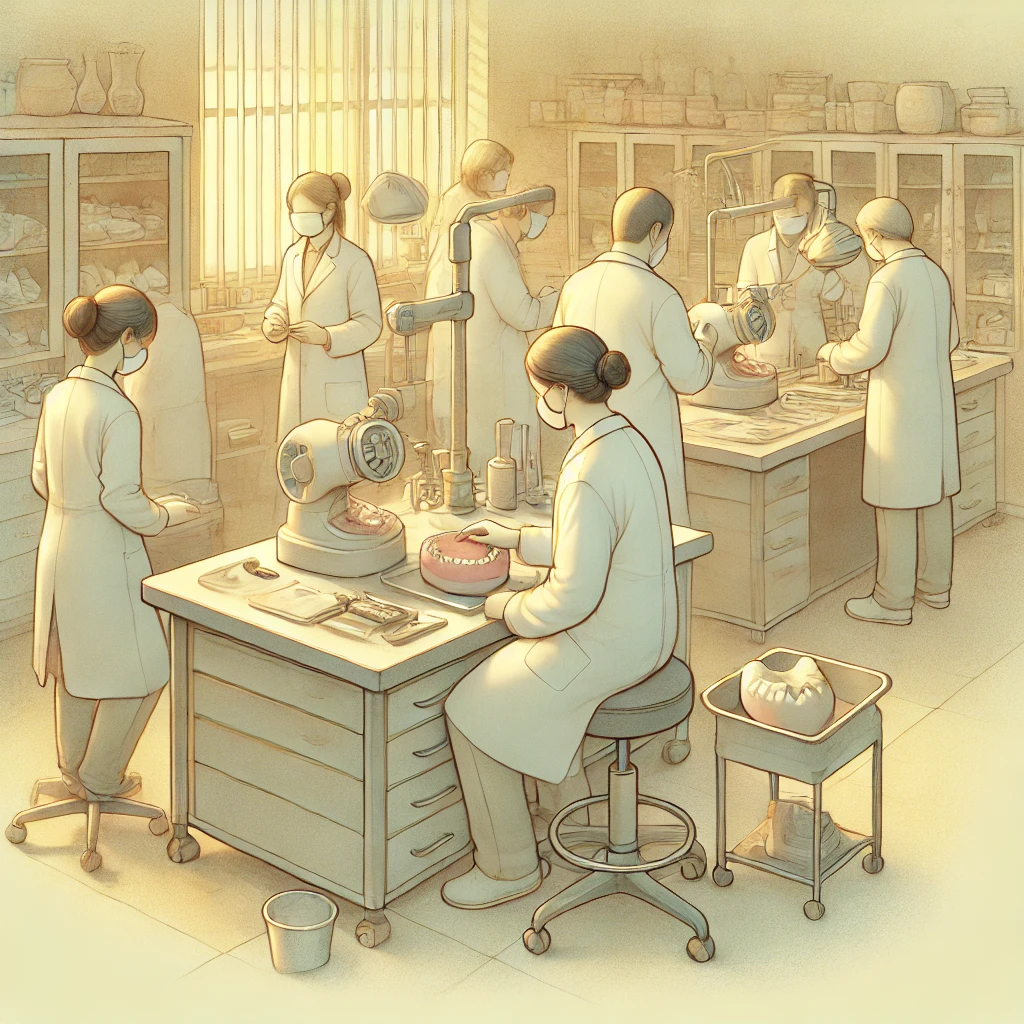
The dentist scans the inside of the mouth and sends the data to amidex. A specialist team then uses a 3D printer to create a transparent mold for the patient, and the dentist injects CR into the mold and hardens it with light. This process does not require extensive tooth removal, so it is possible to restore the natural shape of the tooth while minimizing pain. The fact that it is often a self-pay procedure is a drawback, but in some cases the cost is lower than for silver fillings or implants.
(3) The state of dentistry in Japan and new possibilities
Silver fillings are the standard in Japan, but there is an increasing number of people who are concerned about their appearance and want to protect their teeth as much as possible. Although ceramic and implant fillings can be made to look beautiful, they are expensive and the skill of the dentist has a big impact on the outcome. Recently, research has been carried out into technology for regenerating dental pulp (nerve), and there is a growing movement towards “teeth that can be used for a lifetime”. The amidex 3D printer mold is part of this trend, and it is attracting attention as a way of responding to the desire to preserve healthy teeth as much as possible.